
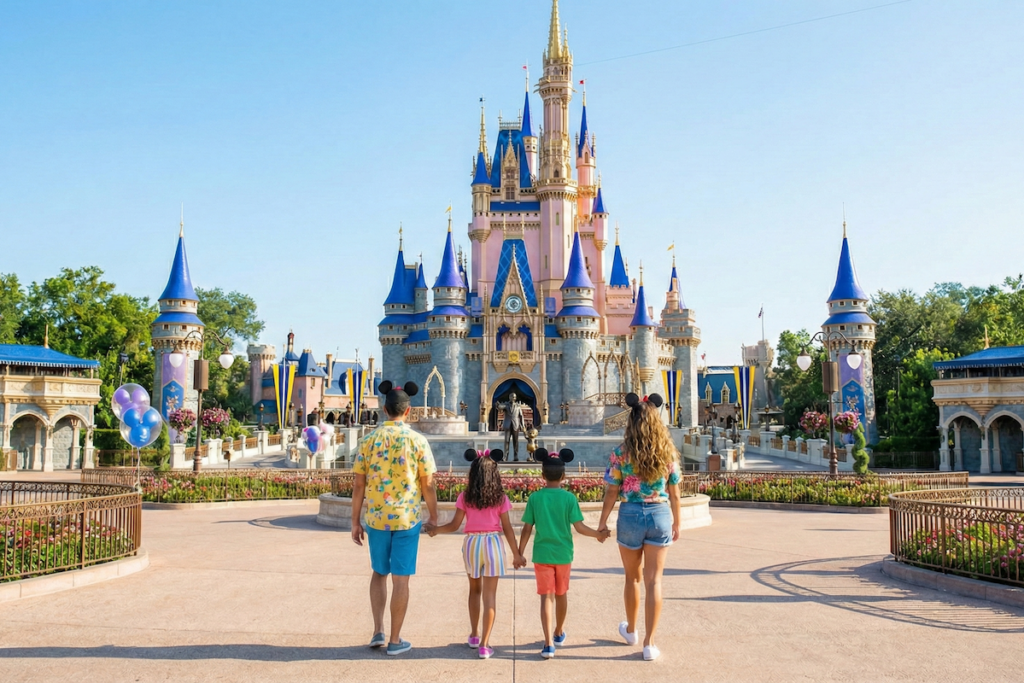
Planning Disney World can feel like a second job, especially when top rides regularly show posted waits over an hour and Disney keeps tweaking systems in 2026. In one recent week, Cosmic Rewind, Slinky Dog Dash, Flight of Passage, and TRON all hovered around 70–90 minute posted waits, so going in with a solid plan is the difference between a relaxed trip and a meltdown in the hub at 2 p.m.
Key Takeaways
| Common Question | Short Answer (2026 Reality) |
|---|---|
| When is the least stressful time to go to Disney World? | USA Today’s 2026 coverage points to mid‑January through early February, with Tuesday to Thursday usually lighter than weekends. That timing cuts crowds and stress before you ever enter the parks. |
| How much should I budget per park day? | Base 2026 tickets run roughly $119–$199 depending on park and date, parking adds about $35 per day, and Genie+ or Lightning Lane can add another $20–$30 per person. Build those into your daily total so there are no surprises. |
| Can I trust Disney’s posted wait times? | TouringPlans found that their “expected waits” beat Disney’s own posted waits 71% of the time in December 2025, so using third‑party data and flexible plans can keep you from standing in lines you do not need. |
| How far ahead do I need dining reservations? | Disney’s 2026 rules still open Advance Dining Reservations at 60 days, and resort guests can book up to 60 days before check‑in for their full stay. Set alarms so you do not miss hard‑to‑get meals. |
| Is summer cheaper or more stressful? | NerdWallet’s 2026 analysis shows summer has some of the cheapest one‑day tickets, around $145 on average, but heat and crowds are high. A clear midday break plan is essential to keep those days calm. |
| Where can I find more trip inspo and planning ideas? | We share relaxed, story‑driven trip ideas in our travel inspo collection and on the Vacay Do homepage, so you can design a vacation that actually fits how you like to travel. |
| What if planning Disney just feels overwhelming? | We get it. You can always through our contact page and we will help you break the process into smaller, manageable steps. |
1. Start With Your Stress‑Free Disney Vision, Not The Park Map
Most people jump straight into park calendars and Genie+ details, then burn out before they even book a room. We suggest you start with how you actually want your days to feel, then fit Disney around that, not the other way around.
Ask a few simple questions as a family.
- Do we want early mornings or slower starts?
- Are we “ride everything” people or “swim and snack” people?
- How many park days before we need a rest day?
Once you know that, you can choose trip length and pace.
Many families feel calmest with 4 park days and at least 1 non‑park day in the middle to float in the pool, nap, and reset.
You can also look at how you like to road trip or explore cities for inspiration.
If slow scenic drives appeal to you, the relaxed pacing style behind our article on the best coastal drives for breathtaking ocean views is the same mindset we bring to Disney planning, with buffers and backup plans baked in.
2. Budget Without Guesswork: Tickets, Parking, And Genie+ In 2026
Money stress is one of the fastest ways to kill the magic, so we like to front‑load all the cost talk. That way, you are not doing mental math in the popcorn line.
Core 2026 Costs To Plan Around
- Tickets: In 2026, typical one‑day park prices are about:
- Animal Kingdom: $119–$169
- EPCOT: $129–$194
- Hollywood Studios: $139–$194
- Magic Kingdom: $139–$199
- Parking: Around $35 per day if you are not staying at a resort with included parking.
- Genie+ / Lightning Lane: Roughly $20–$30 per person per day in 2026 if you choose to buy it.
Build A Simple Daily Budget
Use a quick framework to keep things calm.
| Item | Typical 2026 Range (Per Adult) |
|---|---|
| Park ticket | $130–$190 |
| Parking | $35 per car |
| Genie+ / Lightning Lane (optional) | $20–$30 |
| Food + snacks | $50–$80 |
Decide what you are comfortable with per park day, then multiply by your number of days.
Seeing the total written out drops stress because you know exactly what you are signing up for.
Use Ticket Pricing To Your Advantage
NerdWallet’s 2026 analysis shows summer tickets can average around $145 for a one‑day adult ticket, and August and September often sit in the lower price bands too.
If your budget is tight but you can handle heat, those months can save you hundreds over a family of four.

3. Choose The Right Time To Go For Lower Crowds And Lower Stress
When you go often matters more than anything else for a calm vacation. Lower crowds mean shorter lines, less walking in tight spaces, and fewer sensory overload moments.
Best Times In 2026 For Relaxed Crowds
USA Today’s 2026 reporting points to a few windows that routinely feel calmer.
- Mid‑January to early February (avoiding major runDisney weekends)
- Weekdays in that window, especially Tuesday through Thursday
- Selected late August and early September weekdays when schools are back in session
If you are flexible, build your trip around those kinds of weeks.
You will still see lines, but the difference between a manageable 35 minutes and 75 minutes adds up fast over a day.
Calibrating Your Expectations
Theme Park IQ data shows an average posted wait across Walt Disney World around 29.9 minutes, with lows near 17 minutes and highs close to 49 minutes.
Knowing it is normal to see a spread like that helps you avoid panic when one line looks long.
Follow this 5-step process to plan a stress-free Disney World vacation. It covers budgeting, park strategy, and day-by-day planning.
Match Parks To Your Crowd Tolerance
In 2025 analysis, Hollywood Studios posted the highest average waits and Magic Kingdom the lowest over a specific week, which lines up with how intense Studios can feel in 2026.
If you have kids or adults who get overwhelmed, cluster your calmest days around EPCOT and Animal Kingdom, and give Hollywood Studios a clear morning strategy so you are not trapped in long Toy Story Land queues.
4. Build A Simple, Flexible Day‑By‑Day Disney Itinerary
We have seen the most relaxed trips follow a repeatable daily rhythm, not a hyper‑detailed marching order. Think of it like a loose road trip plan that still leaves room for detours.
The 4‑Block Stress‑Free Day Structure
Break each park day into four blocks.
- Early morning: High‑priority rides while waits are lowest.
- Late morning: Shows, lower‑stress rides, mobile‑order snacks.
- Midday break: Back to your hotel or a shaded lounge.
- Evening: Nighttime favorites, fireworks, or a quiet dinner.
Assign only 1–2 “must‑do” items per block.
If you hit them, you will feel accomplished, and if you miss one you can slide it to another day without panic.
Use Crowd Data Instead Of Guesswork
TouringPlans logged over 45,000 actual wait times from May 2025 onward and found their expected waits beat Disney’s posted times about 71 percent of the time in December.
In 2026, that kind of data helps you decide whether to rope drop Flight of Passage or save it for later in the night, instead of trusting a random app refresh.
Plan Rest Days Like Attractions
At least every third day, schedule a non‑park day in your itinerary.
Treat pool time, Disney Springs browsing, or a leisurely lunch exactly like you would a headliner ride so you actually protect that downtime.
5. Master Genie+, Lightning Lane, And Ride Strategy Without Losing Your Mind
Genie+ and Lightning Lane can either save you hours or add stress if you treat them like a game you must win. We prefer to think of them as tools you choose, not requirements.
Decide If Genie+ Is Worth It For Your Group
At roughly $20–$30 per person per day in 2026, Genie+ is not cheap, especially for larger families.
Use this quick test: if you hate early mornings but want multiple headliners at Hollywood Studios or Magic Kingdom, it is usually worth it for at least one or two days.
Know The Historically Longest‑Wait Rides
Data from fall and summer 2025 shows a familiar pattern that still holds in 2026.
- Guardians of the Galaxy: Cosmic Rewind at EPCOT, often above 90 minutes on peak days
- Slinky Dog Dash at Hollywood Studios
- Avatar Flight of Passage at Animal Kingdom
- TRON Lightcycle / Run at Magic Kingdom
Plan rope drop, late‑night rides, or paid Lightning Lane around those, not random mid‑tier attractions.
That one choice alone can cut hours of line time over a trip.
Keep Your Strategy Simple
Aim for two “anchor” attractions to focus your Genie+ or standby strategy around, then treat everything else as a bonus.
Stress explodes when every ride feels urgent, so we build in permission to skip things in advance.
6. Book Dining And Special Experiences At The Right Time
Scrambling for meals is one of the most avoidable Disney stressors. A tiny amount of upfront work gives you calm, sit‑down breaks every day.
Understand The 60‑Day Rule
In 2026, Disney still opens Advance Dining Reservations at 60 days in advance.
Resort guests can book up to 60 days before check‑in for the length of their stay, which is a quiet superpower for popular meals and Enchanting Extras.
Set A Simple Booking Gameplan
We suggest this 10‑minute process.
- Count backwards 60 days from your check‑in date and put a calendar reminder for that morning.
- Make a short list of “must‑have” meals, like character breakfasts or a special anniversary dinner.
- On booking morning, grab those first, then fill in flexible options later in the day.
Most families only need 1 table‑service reservation per day to anchor their schedule.
Everything else can be mobile ordered or grabbed on the fly, which keeps your day from feeling over‑programmed.
Leave Space For Spontaneous Snacks
If you love food‑focused exploring, treat Disney a bit like the street food wanderings we write about, not a rigid tasting menu.
You can plan one or two “snack crawls” in each park, then use mobile order windows for calm, low‑wait pick‑ups.
7. Pack For Comfort, Not Just Cute Photos
You will walk miles per day, often in Florida heat or surprise rain, so your packing list has a huge impact on stress. Blisters and soaked sneakers ruin moods faster than any long line.
Non‑Negotiable Comfort Items
Make a small “comfort kit” that stays with you in the parks.
- Broken‑in walking shoes and moisture‑wicking socks
- Refillable water bottles and electrolyte packets
- Light ponchos or quick‑dry jackets
- Portable fan or cooling towel for summer trips
- Basic meds and blister care
Kids especially calm down faster when you can solve small discomforts quickly.
That one bag can save more meltdowns than any character meet and greet.
Plan For Different Park Vibes
Hollywood Studios and Magic Kingdom often feel more crowded and paved, so breathable fabrics and sun protection matter.
Animal Kingdom and EPCOT have more shade and indoor spaces, but that Florida humidity still hits hard in 2026.
Use Park Bags To Pace Your Day
We like having one “base” bag that stays under a stroller or in a locker with backups and a smaller crossbody for phones and cards.
That setup keeps you light in lines while still giving you access to anything you need within a few minutes.
8. Set Realistic Ride Goals For Each Park
You will not ride everything in one trip, and trying to is one of the biggest stress creators we see. Clear priorities calm everyone down, especially kids.
Rank Rides Before You Go
Make a simple list for each park with three tiers.
- Tier 1: Must‑do (devote rope drop, Genie+, or late night here)
- Tier 2: Would like to do (use gaps in your day)
- Tier 3: Bonus (only if you stumble on short waits)
Share these lists with older kids and teens so expectations are set.
When something moves from Tier 2 to Tier 3 mid‑trip, you can point at the list and show that the plan is working, not failing.
Use Wait Time Patterns To Your Advantage
We know that headliners like Cosmic Rewind, Slinky Dog Dash, Flight of Passage, and TRON often hit the longest waits between mid‑morning and mid‑afternoon.
So we either hit them at rope drop, pay for Lightning Lane, or aim for the last 60–90 minutes of the night.
Celebrate Wins, Not Checklists
At the end of each day, talk about your three favorite moments, not how many rides you did.
That habit keeps the focus on fun and connection instead of numbers, which is what you will remember later anyway.
9. Build In Buffer Time For Sleep, Travel, And “Uh‑Oh” Moments
Most people underestimate how tiring Disney World is, especially in 2026 when typical Magic Kingdom hours can stretch from early morning through late at night. Planning buffer time is not lazy, it is strategic.
Respect Park Hours And Travel Time
As of February 17, 2026, Magic Kingdom commonly lists hours like 7:30 a.m. to 11:00 p.m. on crowd‑level 5 days.
You do not need to be there rope drop to close, and in fact, you should not try unless you are planning a recovery day.
Use Travel Buffers
Give yourself at least 60–90 minutes between leaving your room and expecting to hit your first attraction.
Buses, monorails, security, and walking all eat more time than most people expect.
Plan For Weather And Tech Hiccups
Afternoon storms, app glitches, and ride downtime are all part of the current Disney reality.
Instead of fighting them, decide ahead of time how you will pivot, whether that is heading to a show, a snack, or a mid‑day nap.
10. Keep Everyone’s Energy And Emotions In A Good Place
You can have the perfect spreadsheet and still melt down if people are hungry, hot, or overstimulated. Emotional planning is just as important as ride strategy.
Use A “Tap Out” Plan
Before you go, agree on a simple phrase that means “I need a break, now.”
When anyone uses it, you pivot to a calm activity with no questions asked, whether that is a show, an air‑conditioned shop, or heading back to the room.
Feed People Before They Are Hungry
Aim for small, frequent snacks instead of long gaps between big meals.
Lines can spike at typical lunch and dinner times, so we like to eat slightly early and use mobile order to skip extra waiting.
Give Kids Agency
Even young kids feel calmer when they have choices.
Offer them two or three options for the next ride or snack, all pre‑screened by you, so they feel involved without derailing the day.
Conclusion
A stress‑free Disney World vacation in 2026 is not about doing everything, it is about aligning your trip with how you actually like to travel. When you pick calmer weeks, set a clear budget, use simple ride and dining strategies, and protect rest time, the parks suddenly feel a lot more manageable.
We plan Disney trips the same way we plan coastal drives or Route 66 road adventures, with room to breathe and enjoy the moments in between. If you want help turning this guide into a day‑by‑day plan for your family, you can always , and we will walk through it together so your next Disney vacation feels like a vacation again, not a project.