
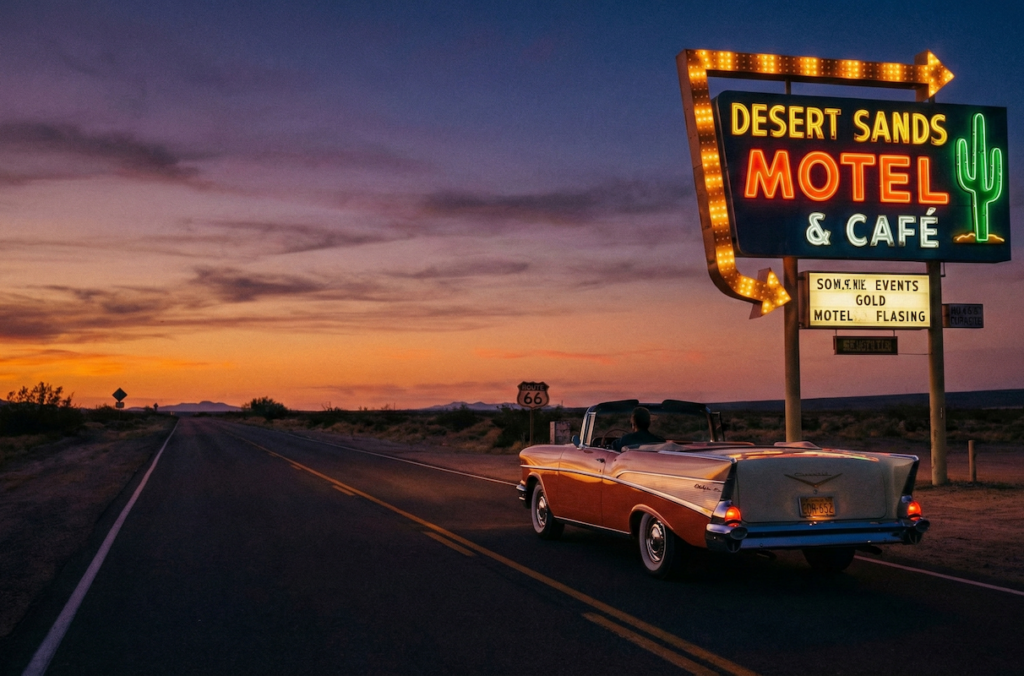
You want a trip that feels like a time machine. Route 66 delivers exactly that. Traveling from Chicago to Los Angeles gives you a front row seat to the decades that defined American road culture. We focus heavily on the years spanning the 1950s through the 1990s. You will see classic cars, towering neon signs, and old school restaurants.
Let’s break it down…
Chicago to St. Louis: The 1950s Era
Your trip begins in Illinois. Before you leave Chicago, grab a slice of deep dish pizza. The cheese pulls in long strings. The crust is thick and buttery. You start your trip with a full stomach. You leave the big city and quickly hit the two lane highway. You need to stop at classic 1950s restaurants along this stretch. Picture black and white checkered floors, red vinyl booths, and chrome barstools. A jukebox plays rock and roll in the corner. You order a patty melt and a thick chocolate milkshake. You eat half of the sandwich and save the rest for later.
Here is why. These restaurants preserve the exact feeling of post war America. The food is simple, fast, and comforting. You can even recreate this specific magic in your own kitchen. Try making a classic smash burger at home. Press a fresh ground beef ball flat onto a smoking hot cast iron skillet. Let the edges get crispy. Add a slice of sharp cheddar cheese. Serve it on a buttered, toasted bun with caramelized onions and a side of crinkle cut fries. Cooking this meal brings the spirit of the mother road right to your dining room table.
Next steps. Travel toward Missouri. You cross the Mississippi River and see the Gateway Arch. Stop at Ted Drewes Frozen Custard in St. Louis. They have served thick concrete shakes since the mid twentieth century. You turn your cup upside down, and the ice cream stays right in the cup. Motorists traveling in the 1950s loved stopping here for a sweet treat. You will love it too.
Missouri to Oklahoma: The 1960s Motel Boom
You push further west into the Ozarks. The scenery changes. The winding roads take you past old gas stations restored to look exactly like they did in 1965. Vintage pumps sit outside small brick buildings. You might spot a classic Ford Mustang or Chevrolet Bel Air parked out front.
Let’s break it down. The 1960s brought a massive boom in family road trips. Motels competed fiercely for attention. They built towering, flashing neon signs to catch the eyes of tired motorists. You travel into Oklahoma and see this firsthand. The neon displays light up the night sky in bright pinks, blues, and greens.
You want to stay at places like the Munger Moss Motel in Lebanon, Missouri. The neon sign outside is a masterpiece of 1960s design. You pull your car right up to your room door. You feel like you are starring in a classic movie. You are already feeling the nostalgia. Bring a film camera to capture the faded pastel colors of these historic buildings. The photos look much better than standard digital snapshots.
Next steps. Keep moving through Oklahoma. Stop at the Blue Whale of Catoosa. Locals built this massive, smiling blue whale structure in the early 1970s. It sits in a small pond. Families used to swim around it. Now, it stands as a perfect piece of mid century roadside art. You walk inside the whale and look out over the water. It offers a perfect photo opportunity.
Texas to New Mexico: 1970s Roadside Attractions
You cross into the Texas Panhandle. The land gets flat and stretches out for miles. You reach Amarillo and find Cadillac Ranch. An art group created this installation in 1974. Ten classic Cadillac cars stand buried nose first in the dirt. Their tail fins point up at the sky. Visitors bring spray paint and leave their mark on the cars. You grab a can and add your own initials.
Here is why. This stop perfectly captures the rebellious, artistic spirit of the 1970s. It turns cars into an interactive canvas. People travel from all over the world just to paint a small piece of these vintage vehicles. The colors change every single day as new people add their art.
You travel across the state line into New Mexico. The desert heat sets in. Route 66 cuts right through Albuquerque. You find old trading posts selling authentic silver and turquoise jewelry. You stop for a meal featuring Hatch green chiles. You can make a fantastic green chile stew at home. Roast the chiles until the skin blisters. Peel them, chop them, and simmer them with browned pork shoulder, potatoes, and garlic. Serve it with warm flour tortillas.
Next steps. Head to Gallup, New Mexico. The El Rancho Hotel waits for you. Movie stars from the mid century stayed here while filming Westerns. You walk through the lobby and look at autographed photos lining the walls. You sleep in a room named after a famous actor from the 1950s or 1960s. Pack a manual can opener in your trunk for this stretch. You might want to pull over and eat a quick tin of beans by a campfire under the desert stars.
Arizona: The 1980s Family Vacation Vibe
You cross into Arizona. You ride past the Painted Desert and the Petrified Forest. The land looks like a different planet. You stop in Holbrook to see the Wigwam Motel. You literally sleep inside a giant concrete teepee. Families in the 1980s loved these quirky stops.
Let’s break it down. Before smartphones and tablets, parents needed big, loud attractions to keep kids entertained in the back seat. Towns built giant dinosaur statues and advertised secret meteor craters for miles before you actually reached them. Billboards teased mystery spots and giant twin arrows planted in the dirt.
You visit Oatman, Arizona. Wild burros roam the streets of this old mining town. You buy a bag of carrots and feed the donkeys right out of your hand. They stick their heads through your car window. The town hosts staged gunfights in the middle of the street. It feels like stepping straight into an old Western film.
Next steps. Turn slightly north and visit the Grand Canyon. Millions of families in the 80s packed into station wagons to stare into this massive hole in the ground. You stand at the edge and take in the sheer scale of the canyon walls. You watch the sun set and turn the rocks bright red and orange.
California: The 1990s End of the Trail
You enter California and cross the Mojave Desert. The heat is intense. You stop at a lonely desert gas station for a cold soda. The long stretches of empty road give you time to think. You pass abandoned ghost towns that used to serve thousands of motorists every day.
You finally reach the coast. The road ends in Los Angeles. You head to the Santa Monica Pier. By the 1990s, road trips became heavily focused on reaching the final destination. You walk out onto the wooden pier. You find the official sign marking the end of the trail.
Here is why. Reaching the Pacific Ocean feels like a massive accomplishment. You traveled across the country. You saw the terrain change from green fields to red deserts to blue water. You tracked the evolution of American pop culture from the 1950s right up to the 1990s.
You ride the Ferris wheel and look out over the water. You grab a hot dog from a stand. You think about the classic cars, the neon signs, and the food. You lived out a piece of American history.
Next steps. Plan your packing list. Check your car battery and tires. Grab a physical paper map. Get out on the open road.